Why great leaders simply choose a different currency
By Mark Conner
“Your volunteers work for free.”
I’ve heard that line more times than I can count. And every time, I think the same thing.
No, they don’t.
Every organization pays its people. The only difference is the currency.
For businesses, that currency is easy to spot: salaries, bonuses, stock options, benefits. It’s how a company recognizes the value someone creates.
Social profit organizations pay differently. Our compensation doesn’t land in a bank account. It lands in the human spirit.
The longer I lead alongside the volunteers of Sleep in Heavenly Peace, the more convinced I am that we’ve been asking the wrong question. Instead of “How do we recruit more volunteers?” maybe the better question is:
“How do we create more fulfillment?”
Because fulfillment is the currency that fuels every social profit organization I’ve ever seen succeed.
Why “Nonprofit” Never Sat Right With Me
I’ve never loved the word nonprofit. It defines an organization by what it isn’t — like calling Apple a “non-government company.” It tells you nothing about who they are or what they build.
SHP isn’t defined by the absence of profit. We’re defined by a different kind of profit.
Social Profit.
Businesses create financial profit. We create human profit: a child who finally sleeps safely in their own bed, a family that finds hope in a hard season, a volunteer who discovers purpose, a leader who finds their confidence, a community that rallies around something bigger than themselves.
That’s our profit. Money is the fuel. Social profit is the product.
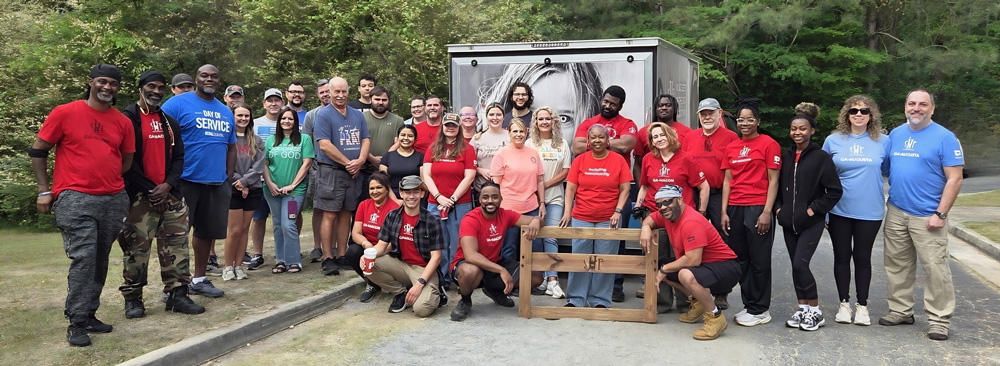
Every year, more than 160,000 volunteers give their time, talent, and heart to SHP. Hundreds of thousands of hours for kids most of them will never meet. If volunteers truly worked for free, none of that happens. People keep showing up because they’re getting paid something every bit as real as a paycheck.
What I Saw Behind the Build
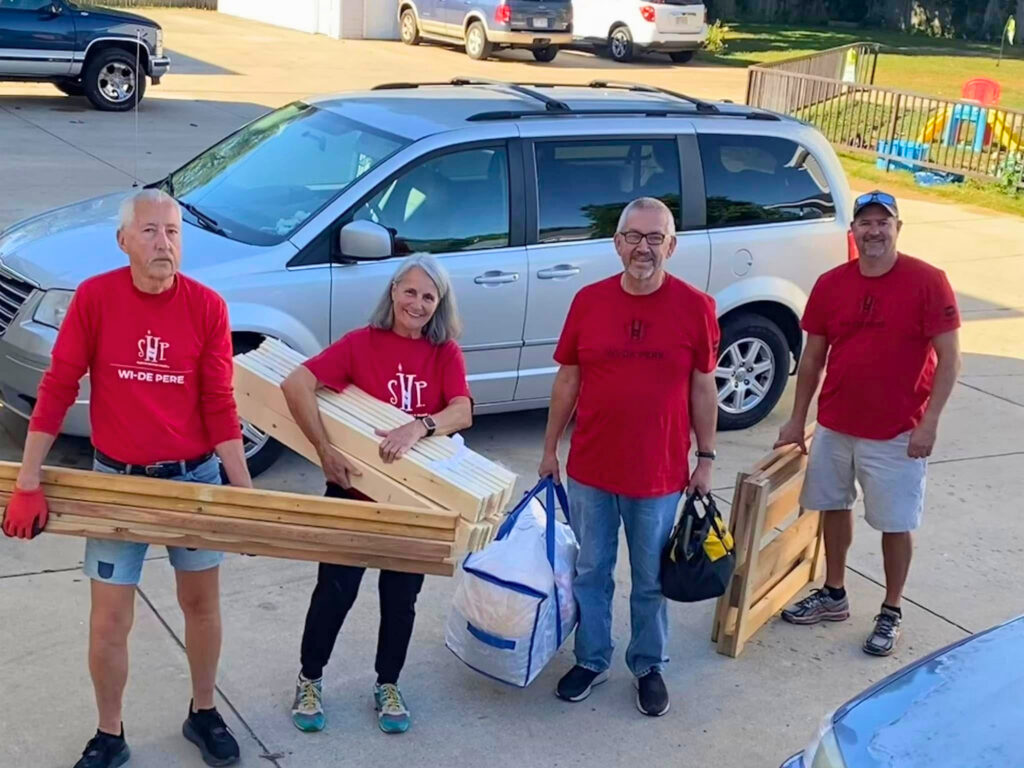
At a recent bed build, I caught myself watching the people more than the beds.
The build floor was exactly what you’d picture — volunteers giving up a Saturday, families working side by side, first-timers learning from veteran chapter members. But the real story wasn’t on the build floor. It was behind it.
Weeks earlier, a volunteer leadership team had secured the venue, recruited hands, lined up sponsors, ordered materials, and worked out a hundred logistical details so that Saturday could happen. They weren’t nonprofit professionals. They were teachers, small business owners, healthcare workers, tradespeople, parents, retirees; people running full lives, who still said yes to one more build.
There’s an old saying: if you want something done, give it to a busy person. I’ve watched that prove true again and again in our chapters.
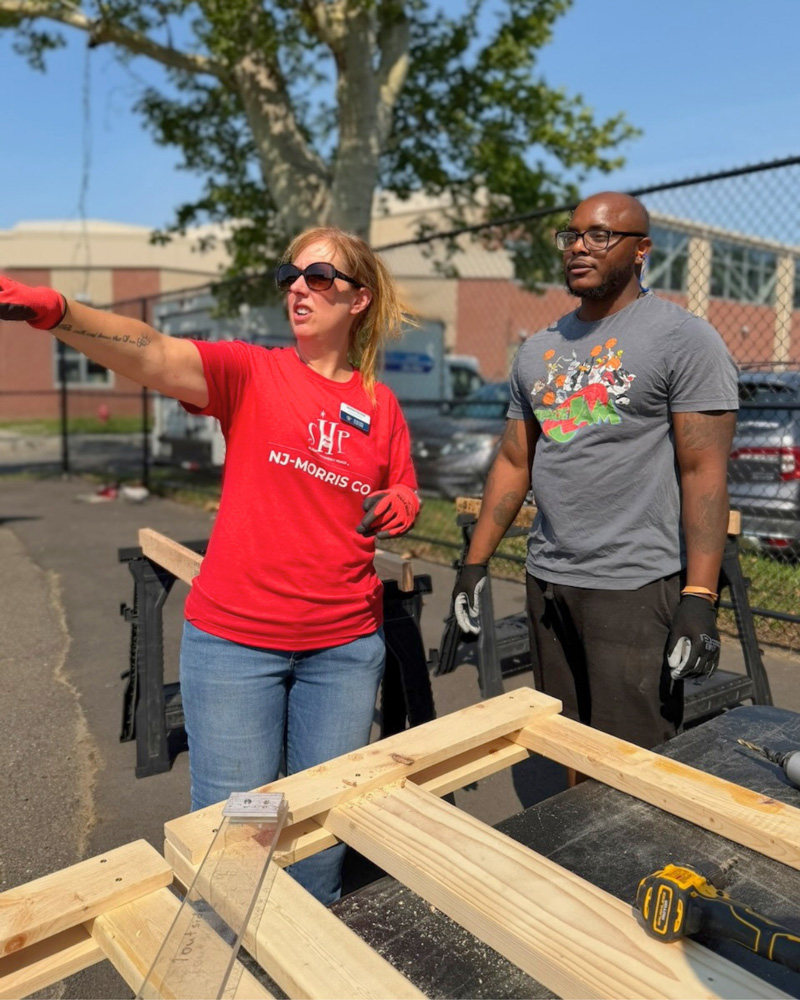
So I started asking why. What compels someone to give hundreds (sometimes thousands) of hours with no paycheck, no negotiated benefits, nobody asking what’s in it for them?
By the end of the day, people were exhausted. They were also smiling.
That’s when it landed for me: they’d been paid. Not in dollars — in fulfillment. And that changed how I think about leadership for good.
The Equation of Fulfillment
If fulfillment is our currency, what gives it value? After watching thousands of volunteers and hundreds of chapter leaders, I believe it comes down to four things:
Significance. Connection. Growth. Contribution.
Together, they form what I call the Equation of Fulfillment:
Fulfillment = Significance + Connection + Growth + Contribution
It always adds up to 100%, but no two people solve it the same way. One volunteer might split it evenly across all four. Another might lean heavily on connection and community, and barely need recognition at all. A third is chasing growth and leadership. Someone else just wants to contribute quietly and go home.
There’s no universal formula. The percentages shift person to person. The outcome — 100% fulfillment — doesn’t.
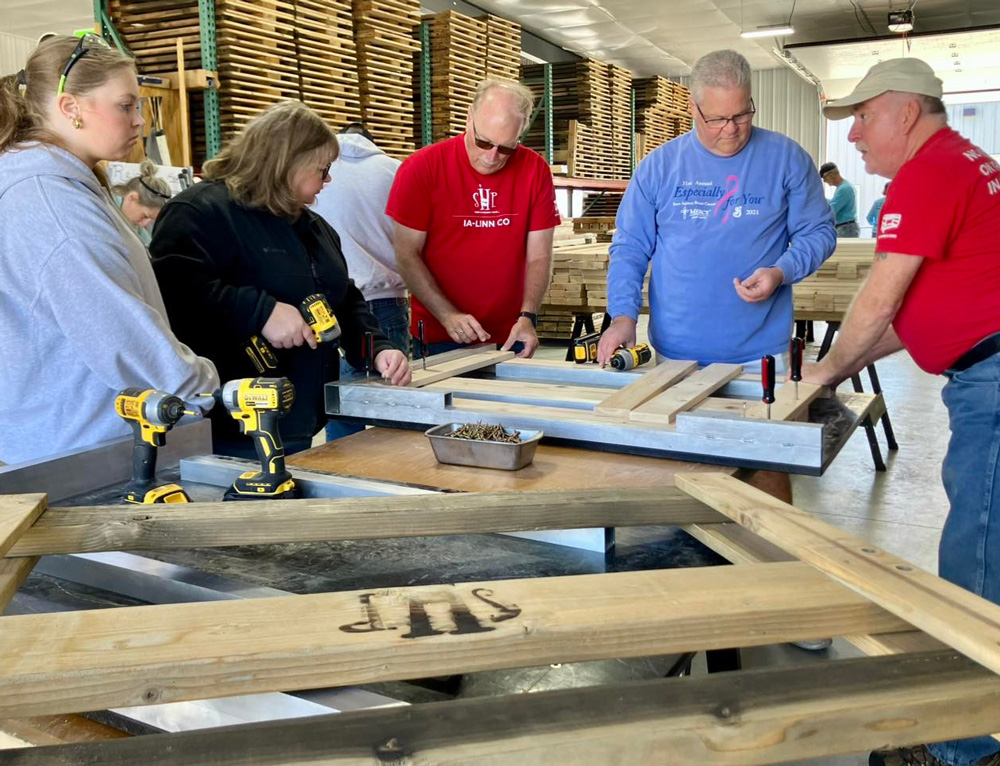
That’s why the best volunteer leaders I know don’t run a one-size-fits-all playbook. They pay attention to what fills each person’s equation, then build experiences that deliver it. The exchange rate is personal. But those four principles, together, are the return every volunteer earns on the time and heart they invest.
More Than a Volunteer Event
What sets SHP apart isn’t just that we build beds for kids. It’s that our mission creates space for all four pillars of fulfillment to show up at once, in the same afternoon, for very different people.
Some volunteers live for the build. Others find their fulfillment on delivery day. Some recruit. Some raise funds. Some mentor new chapter leaders or serve on a board. Every role feeds the mission. Every role creates fulfillment somewhere along that equation.
And fulfillment has a property money doesn’t have, it compounds. A volunteer goes home inspired and tells their spouse. Their spouse shows up next time. They bring a friend. That friend brings a coworker. Kids watch their parents serve and grow up believing that’s just what people do.
Unlike money, fulfillment doesn’t shrink when it’s shared. It multiplies. That’s how social profit grows.
Protecting the Currency
This is why Protecting the Volunteer Experience is one of our core values at SHP. People assume that just means running a fun event. It’s deeper than that.
If fulfillment is our currency, the volunteer experience is where it gets earned; every leadership decision either makes a deposit or a withdrawal.
A warm welcome, clear communication, a clear sense of purpose, real gratitude = deposits. Confusion, poor planning, disorganization, feeling unappreciated = withdrawals.
Every interaction leaves a volunteer richer or poorer than when they walked in. That’s not hospitality. That’s stewardship. That’s leadership.
Measuring What Matters
The strongest chapter leaders I know are always chasing more beds built and delivered, but they instinctively know that greater impact starts with a better volunteer experience. Most wouldn’t put it in these terms. They just keep asking, “How do we make the next one even better?”
Businesses measure value with ROI, EPS, customer lifetime value. We need strong financial numbers too, but our greatest asset isn’t capital, it’s people. So maybe our defining metric should be Experiences Per Volunteer (EPV) — not measured in dollars, but in the depth and quality of what a volunteer walks away with.
Every leadership decision moves that number up or down. Volunteers who experience real fulfillment don’t just come back, they bring friends, become donors, step into leadership, and carry the mission forward.
Most organizations measure success by what they produce: beds built, families served, volunteers recruited. Those numbers matter. But I think there’s another question worth asking at the end of every day:
How much fulfillment did we create today?
Leadership isn’t only about creating value through people. It’s about creating value within them.
We build beds at SHP. But along the way, we’re also building leaders, friendships, strengthening communities and a deeper sense of purpose in everyone who shows up.
The next time you’re making a call as a leader, I urge you not just to ask, “Will this help us recruit more volunteers?” Ask, “Will this increase the fulfillment people feel serving alongside us?”
Every organization pays its people. Businesses pay in dollars. Social profit organizations pay in fulfillment. The leaders who get that don’t just recruit volunteers, they build experiences people never want to leave.
When significance, connection, growth, and contribution come together, something extraordinary happens: people leave richer than when they arrived.
That’s the currency of Social Profit.